
Huguenin Heights was the Macon Heritage Foundation's first neighbourhood restoration project, begun in 1994, and it anchors Mercer Village on the College Hill Corridor. The housing is a mix of carefully restored single-family homes owned by Mercer faculty, young professionals and long-term residents, alongside some rental property. The restoration history matters for this work, because it means there is finish work worth protecting and a renovation record worth reading.
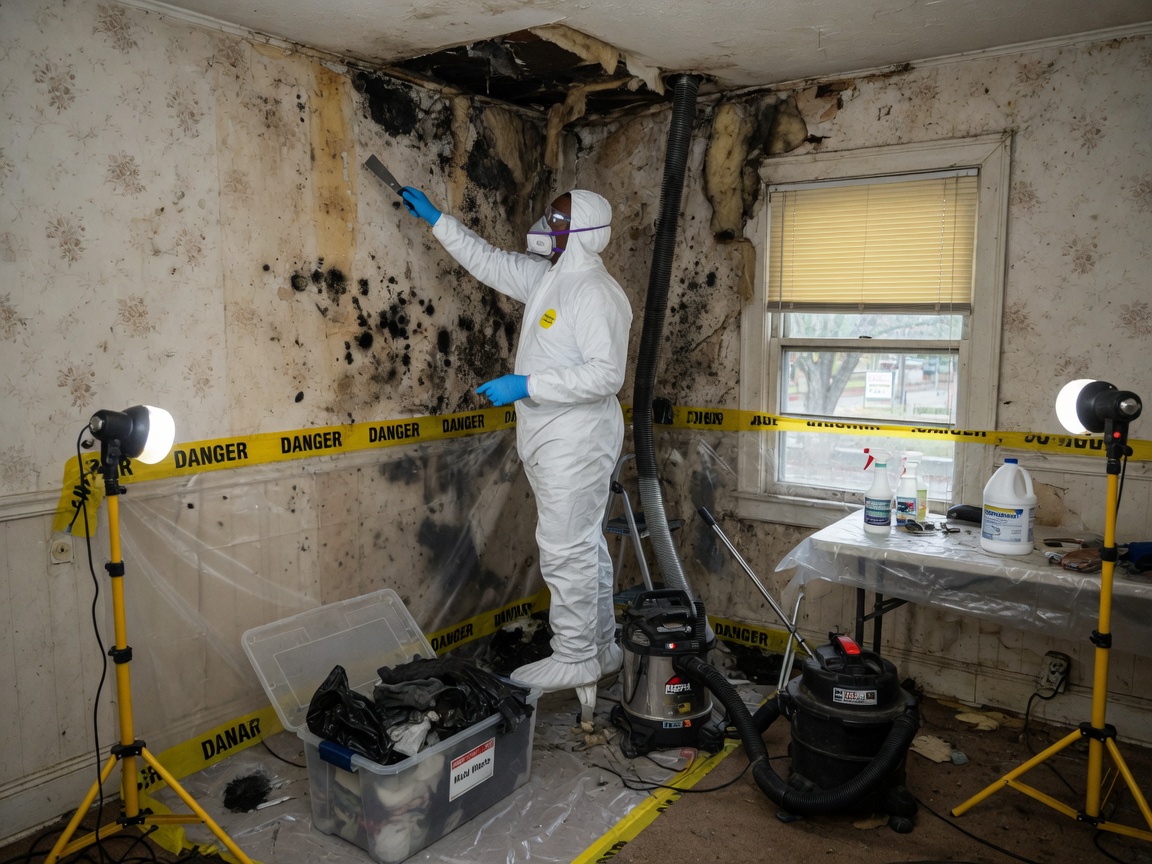
On a restored house the priority is scoping tightly. Plaster over wood lath holds moisture differently from drywall and reads unreliably on a surface moisture meter, because the lath creates air gaps that distort the signal. The visible staining rarely marks the real boundary of a colony. Establishing where it actually stops takes a pin meter, thermal imaging or a small borescope hole in an inconspicuous place, and spending that extra hour is what keeps restored plaster and original millwork in the house rather than in a skip.
The renovation history is worth reading because 1990s restorations have their own recurring faults. Bathrooms and kitchens added or relocated during that work frequently got extraction fans that terminate in the attic rather than through the roof — which puts a shower's worth of warm wet air into the roof structure twice a day, every day, and shows up years later as growth across a wide area of attic decking with no leak at all. Air conditioning added at the same time was usually run as flex duct through the unconditioned attic, and wherever that insulation has since compressed or torn, the cold metal sweats onto the ceiling below through every cooling season.
Foundations follow the corridor pattern: brick piers or early masonry over bare clay, generally with no vapor barrier. Ground moisture rising through the floor is the baseline condition under all of these houses, and because the lots are narrow with mature trees, the crawl space entries tend to be tight. We work these with compact equipment and hand-carried dehumidifiers rather than staging a trailer on a street with no parking.
Proximity to Mercer Village means a share of the housing is tenanted, and where a property is subdivided or shares an attic with a neighbour, containment has to account for the adjoining side. Without that, negative air pressure simply draws spores across the shared cavity, and it is the scope item most often absent from a cheap quote in this part of Macon.
On restored houses here the priority is scoping, which is covered under historic home mold remediation and begins with mold inspection and testing. The two causes we find most are addressed by attic mold removal for attic-vented fans and sweating ductwork, and crawl space encapsulation for the bare clay below. Black mold removal covers the removal itself, and post remediation clearance testing the independent sign-off. All services; nearby College Hill Corridor, Tattnall Square Heights and Intown Macon.
Around Huguenin Heights
We regularly work near:
- 📍Mercer Village
- 📍Mercer University
- 📍Coleman Avenue
- 📍Montpelier Avenue
- 📍Tattnall Square Park
Mold Remediation in Huguenin Heights — Local Notes
- •Restored single-family housing where there is finish work worth protecting and a renovation record worth reading.
- •1990s restorations frequently left bath fans terminating in the attic, wetting roof decking twice a day for decades.
- •Air conditioning added during restoration runs as flex duct through unconditioned attics and sweats onto ceilings.
- •Plaster over lath reads unreliably on surface meters, so colony boundaries need a pin meter or borescope check.
- •Narrow lots with mature trees give tight crawl space access, requiring compact equipment rather than trailer staging.