
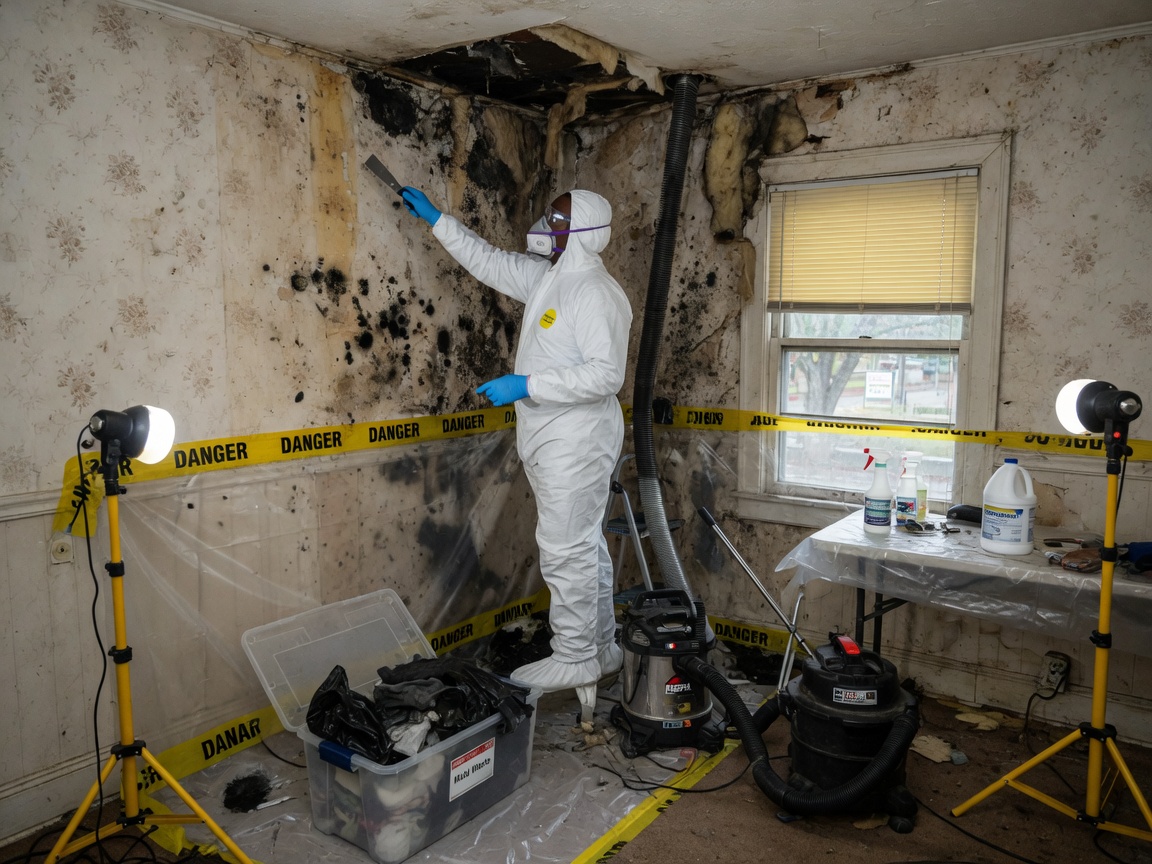
Macon's humid subtropical climate keeps indoor humidity high from spring through fall, allowing black mold to establish quickly behind baseboards, in crawl spaces, and around HVAC returns in homes built before 1960. Properties in the College Street Historic District and Vineville often feature plaster walls over lathe and original hardwood floors that trap moisture from roof leaks or poor grading near Central City Park. Remediation requires isolating the affected area with containment barriers, HEPA vacuuming, and antimicrobial treatment on porous materials that cannot be saved.
In neighborhoods such as Ingleside and Shirley Hills, slab-on-grade construction combined with Bibb County's clay-heavy soils leads to recurring moisture wicking up through foundations after heavy rains. Technicians remove affected drywall and insulation, then apply moisture barriers and improve airflow to prevent regrowth. Work in these areas frequently includes coordination with local permitting when structural wood is exposed.
Downtown Macon buildings and those near Mercer University often have shared walls and limited access points, requiring negative-air machines and careful disposal of contaminated debris to avoid cross-contamination to adjacent units. Post-remediation verification includes moisture meter readings and visual inspection before any rebuilding begins.
Service extends to nearby cities including Warner Robins, Perry, and Milledgeville when homeowners request it, with the same containment and removal protocols adjusted for each building's age and construction type.
Technician insight
In Macon, the thing that catches most people out with black mold removal is hidden growth behind plaster in College Street Historic District homes where original windows and poor roof drainage keep walls damp year-round.
Vineville Home Attic Growth
Homeowner noticed musty smell after summer rains. Inspection found black mold on insulation and rafters from a slow roof leak. Crew contained the attic, removed affected materials, treated surfaces, and improved ventilation. Moisture readings stayed low after drying and the odor was eliminated.
Black Mold Removal Services We Offer
✓Attic Black Mold Removal
Remove mold growth on rafters and insulation caused by roof leaks common in Macon's older homes, followed by ventilation improvements.
✓Crawl Space Mold Remediation
Treat and seal crawl spaces in Bibb County homes where humidity from clay soils promotes black mold on joists and subflooring.
✓Historic Home Mold Removal
Careful removal in College Street Historic District and Beall's Hill properties using methods that protect original plaster and woodwork.
✓HVAC Black Mold Cleaning
Clean and treat ductwork and coils in Macon residences where condensation from the hot summers feeds mold inside air handlers.
✓Basement Mold Remediation
Address below-grade moisture and black mold in properties near Ocmulgee Mounds and Tubman Museum areas with proper drainage fixes.
Black Mold Removal Cost in Macon, GA
| Service | Typical Range | What Affects It |
|---|---|---|
| Small area removal (under 10 sq ft) | $300–$650 | Single room or closet; higher in tight historic spaces |
| Medium area removal (10–30 sq ft) | $650–$1,400 | Includes crawl space or attic sections; depends on material disposal |
| HVAC system cleaning | $450–$900 | Ductwork and coil treatment; varies with home size |
| Full room remediation | $1,200–$2,800 | Larger affected zones in older Bibb County homes |
Ranges are typical for Macon, GA and confirmed with an exact written quote before any work starts.
How it works
- 1
Initial Inspection
Technician assesses visible growth, moisture sources, and affected materials in the Macon property using meters and visual checks.
- 2
Containment Setup
Plastic barriers and negative air pressure isolate the work area to prevent spores from spreading to unaffected rooms.
- 3
Removal and Cleaning
Discard porous materials, HEPA vacuum surfaces, and apply EPA-registered antimicrobials to non-porous items.
- 4
Drying and Verification
Dehumidify the space, recheck moisture levels, and confirm no active growth remains before clearance.
Pricing
Pricing varies by square footage, accessibility, and whether structural repairs are needed after removal.