
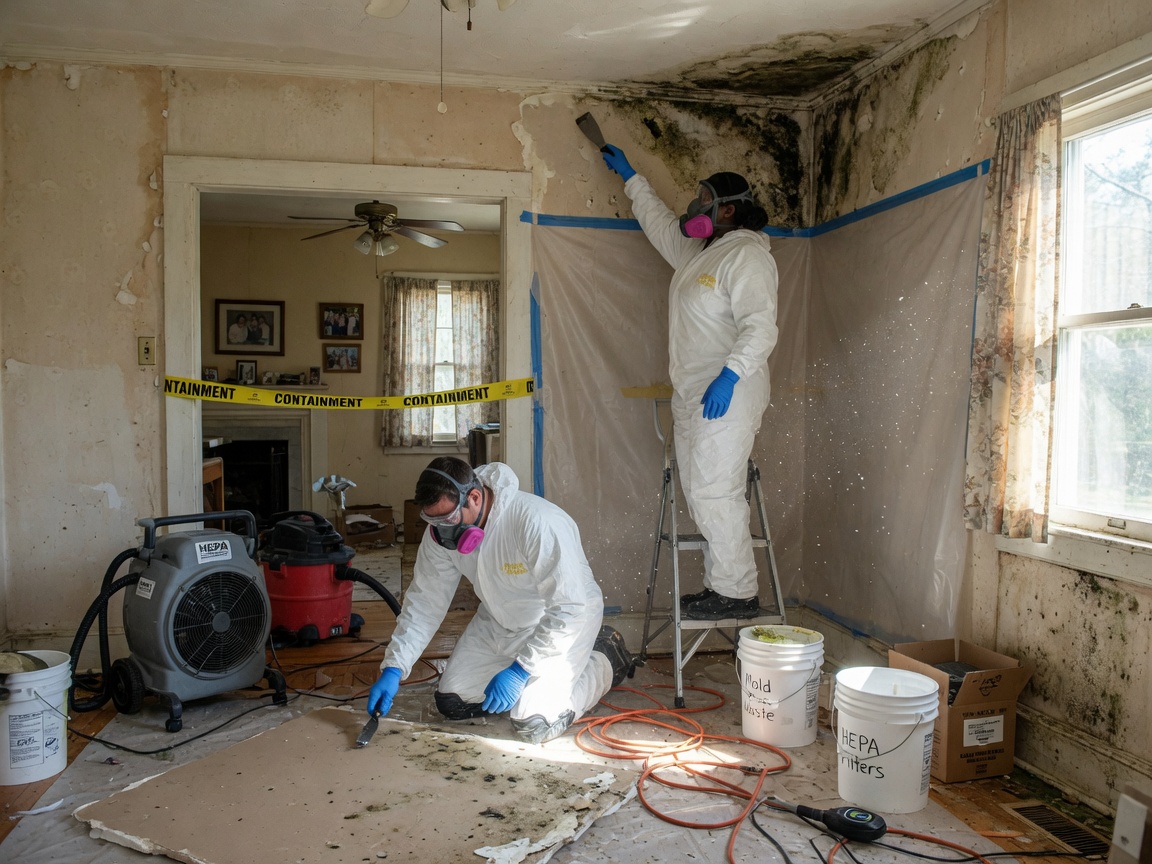
College Hill Corridor homeowners often face mold after summer humidity spikes or minor roof leaks in the older housing stock along College Street and adjacent blocks. Macon Mold Pros responds from 592 Mulberry St with crews familiar with the narrow driveways and tight crawlspaces common in these early-1900s homes. We focus on containment and moisture mapping before any removal begins.
The corridor sits between Mercer University and Central City Park, where mature tree cover and Bibb County’s clay soils slow drainage after storms. This combination keeps basements and pier-and-beam floors damp longer than newer subdivisions in Warner Robins or Perry. Our technicians use targeted air movers and dehumidifiers sized for the smaller lot sizes here.
Mild Bibb winters still allow hidden growth in unconditioned spaces when indoor heating meets residual moisture. Residents in the College Street Historic District section call us for post-storm checks because quick drying prevents spores from spreading through shared walls and attic cavities.
Around College Hill Corridor
We regularly work near:
- 📍Mercer University
- 📍College Street
- 📍Central City Park
- 📍Tubman Museum
- 📍Washington Park
Mold Remediation in College Hill Corridor — Local Notes
- •Many College Hill Corridor homes have original knob-and-tube wiring and shallow crawlspaces that trap humidity from the nearby Ocmulgee floodplain.
- •Narrow streets and limited parking around Mercer University require smaller equipment trailers during remediation jobs.
- •Historic wood siding and single-pane windows create cold surfaces where condensation forms during Macon’s hot, humid summers.
- •Clay-heavy lots near Beall’s Hill drain slowly, so we often install temporary French drains before final drying.