
Vineville runs northwest out of downtown Macon along Vineville Avenue, and its housing is older and considerably larger than the city average — substantial frame and brick houses on deep lots, most of them built between the 1880s and the 1930s. Size is the defining factor for mold work here. These are houses with multiple additions, several roof planes meeting at valleys, two or three separate bathroom stacks, and square footage that means a leak can run for a long time in a part of the house nobody uses daily before anyone notices a smell.
Roof geometry is the recurring culprit. A simple gable roof sheds water predictably. A Vineville house that has been added onto twice has valleys, dead-level transitions, and flashing junctions where a dormer meets a main slope, and those are the points that fail. Water entering at a valley does not drip straight down — it tracks along a rafter, sometimes for several feet, and the growth appears in a ceiling corner well away from the actual failure. We trace the path before quoting, because cleaning the stain and leaving the valley is a guaranteed repeat visit.
The second pattern is specific to conversions. A good number of the larger houses along Vineville Avenue and the cross streets were subdivided into apartments decades ago, and those conversions routinely added bathrooms and kitchens without adding ventilation to match. An upstairs bathroom vented into the attic rather than through the roof will put a surprising volume of moisture into the roof structure every day, and that shows up as growth on decking across a wide area with no leak anywhere. If you own a converted property here, checking where the bath fans actually terminate is worth half an hour of your time.
Crawl spaces in Vineville tend to be deeper than elsewhere in Macon, which cuts both ways. There is room to work properly, which keeps costs down compared with the tight pier-and-beam spaces closer to downtown. But the floor is usually bare clay with no barrier, and the greater volume means more surface area releasing moisture into the house. A sealed liner is normally the highest-value item on a Vineville quote.
Mature oak canopy over most of the neighborhood keeps roofs and north walls shaded and slow to dry after rain, and the same trees drop debris into gutters and valleys all year. A lot of what we are called out for in Vineville traces back to a gutter that has not been cleared in two seasons.
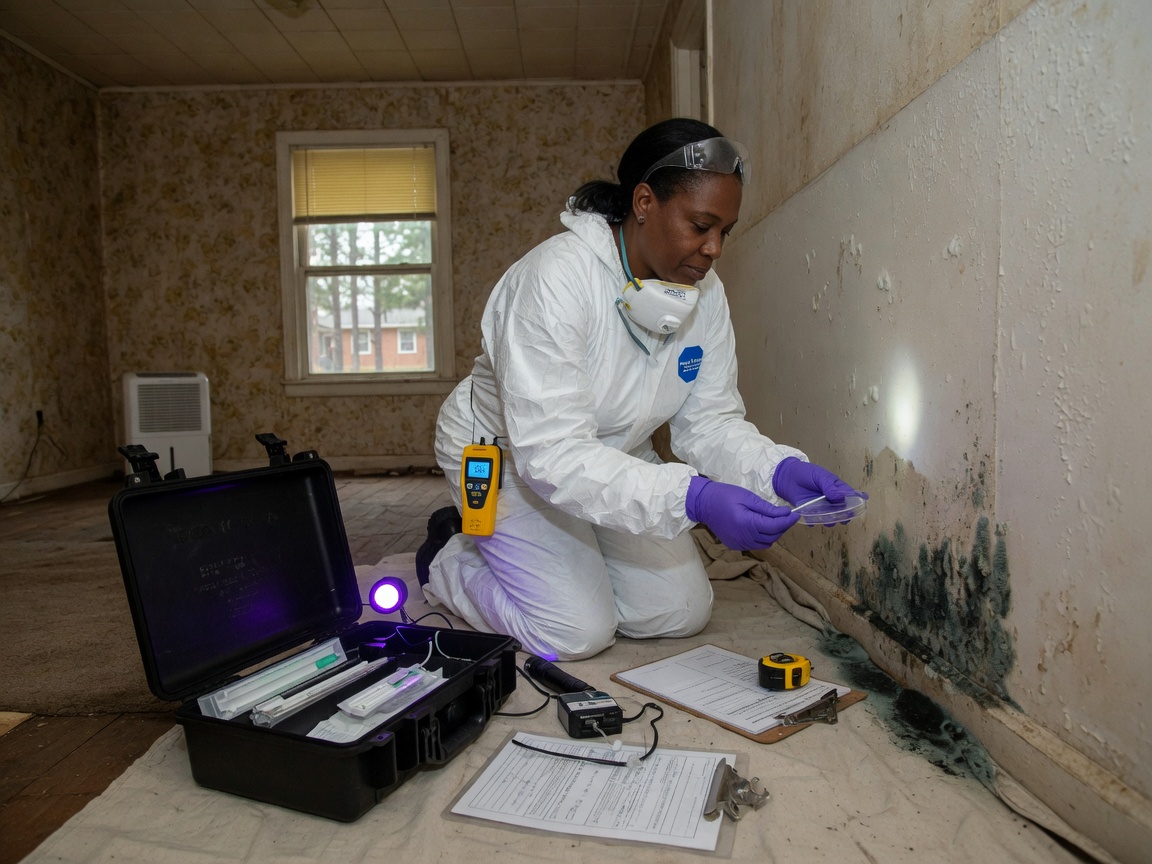
Most Vineville calls begin with mold inspection and testing or black mold removal, and in housing this size attic mold removal and crawl space encapsulation do the most to stop it returning. For a converted property, commercial mold remediation covers multi-unit containment. If water is still coming in, start with emergency mold removal or water damage restoration. On a restored house, historic home mold remediation explains how we scope plaster. Full list on our services page; nearby we also cover Ingleside Historic District and Cherokee Heights.
Around Vineville
We regularly work near:
- 📍Vineville Avenue
- 📍Allman Brothers Band Museum
- 📍Napier Avenue
- 📍Rosa Taylor Elementary School
- 📍Riverside Drive
Mold Remediation in Vineville — Local Notes
- •Multiple additions over a century mean complex roof valleys and flashing junctions, where leaks track along rafters and surface far from the actual failure point.
- •Houses subdivided into apartments often had bathrooms added without matching ventilation, with fans terminating in the attic and wetting roof decking daily.
- •Crawl spaces are deeper than the Macon average, which makes access easier but means more bare clay surface releasing ground moisture into the house.
- •Dense oak canopy keeps roofs and north-facing walls shaded and slow-drying, and fills gutters and valleys with debris year-round.
- •Large floor areas with low-traffic rooms allow leaks to run undetected for months before odor reaches an occupied part of the house.