
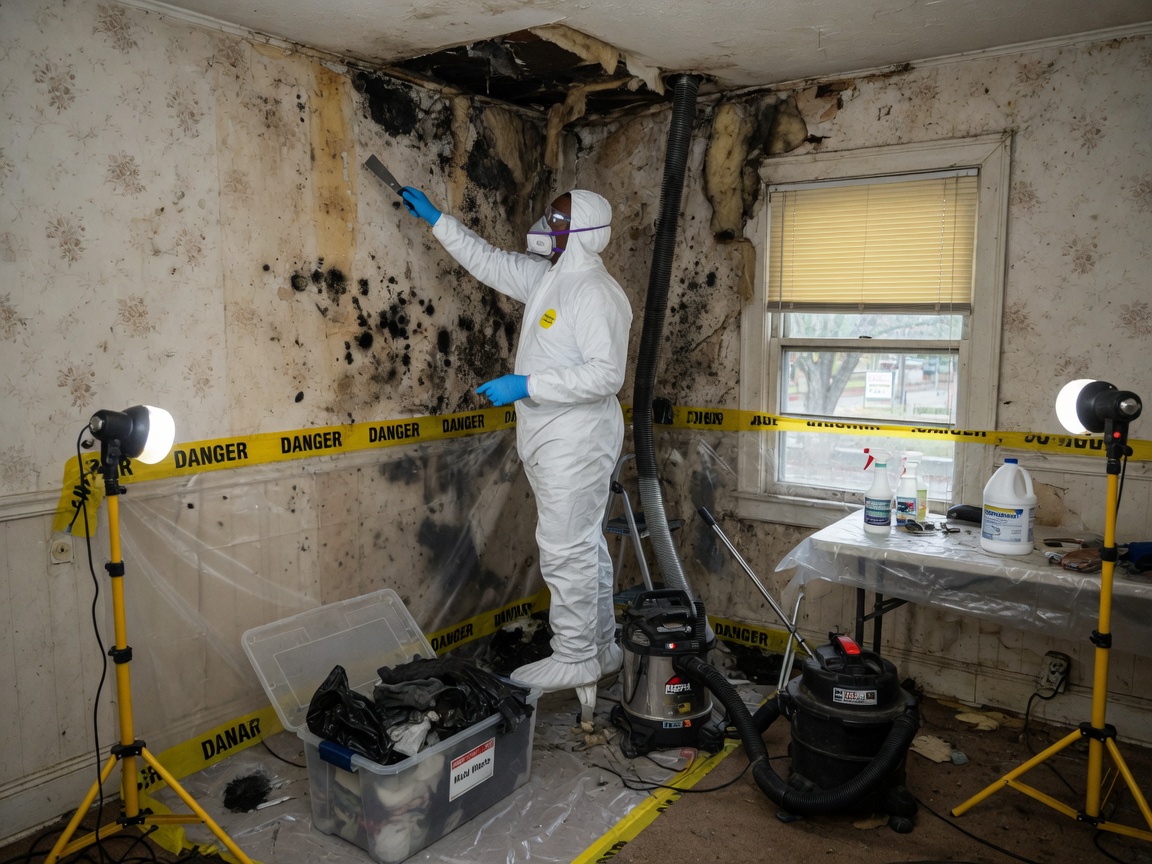
Fort Hill is an east-side historic district on the Macon side of the river, with housing largely from the late nineteenth century through the 1930s. Like much of east Macon it holds a mix of long-held family homes, restored properties and housing where maintenance has been deferred, and the condition of the individual house matters more than the district for deciding what the work involves.
The construction is consistent across the district. Brick pier foundations over bare clay with no vapor barrier, plaster over wood lath in the older properties, original single-glazed sash windows, and air conditioning retrofitted long after the houses were built. Each of those produces its own problem. The crawl space releases ground moisture into the floor structure continuously, which is why the musty smell shows up in a closet rather than anywhere visible. Plaster hides growth in the cavity and reads unreliably on a surface moisture meter. Worn glazing on original sash lets condensation sit on the sill and keep the wall below damp through the cooling season. And flex duct through a 130-degree attic sweats onto ceiling drywall wherever its insulation has failed.
Proximity to the river matters. Fort Hill is on the east side, nearer the Ocmulgee than the ridge neighbourhoods, so ambient ground moisture is higher and the crawl space carries more of the load. Sealing it with a proper liner is almost always the highest-value item on a quote here, and where the budget is limited it is the part we would keep over any treatment product.
Where maintenance has been deferred, we will be straightforward about sequence. If a roof has been leaking for seasons, if a porch roof has been shedding water against a wall, or if glazing has been gone from a window for years, remediation alone will not hold — cleaning growth under an active water source is money spent twice. In those cases we try to sequence the work so the most consequential repair comes first, rather than quoting the whole backlog at once and pricing the job out of reach.
All of this housing predates 1978, so painted surfaces should be assumed to contain lead until tested. Disturbing them during mold demolition creates lead dust, which where young children live in the property is a more serious health risk than most mold findings. Lead-safe work practices apply and we quote them openly.
The crawl space carries most of the load here, so crawl space encapsulation is usually the first thing worth paying for, with mold inspection and testing to confirm it. Attic mold removal covers sweating ductwork, black mold removal the removal itself, and historic home mold remediation plaster and lead-safe handling. With a roof still leaking, start at water damage restoration; nearer the river, see flood mold remediation. All services; nearby East Macon and Pleasant Hill.
Around Fort Hill
We regularly work near:
- 📍Fort Hill Historic District
- 📍Ocmulgee River
- 📍Emery Highway
- 📍Shurling Drive
- 📍Coliseum Drive
Mold Remediation in Fort Hill — Local Notes
- •Late 1800s to 1930s housing in mixed condition, so the individual property matters more than the district.
- •Brick pier foundations over bare clay with no vapor barrier, and higher ambient ground moisture from river proximity.
- •Plaster over lath hides growth in the cavity and reads unreliably on surface moisture meters.
- •Retrofitted attic ductwork sweats onto ceiling drywall wherever its insulation has failed.
- •All housing predates 1978, so lead-safe practices apply to any demolition of painted surfaces.