
2026-09-18 · Marcus Hale
How to Spot Hidden Mold After Macon Summer Storms
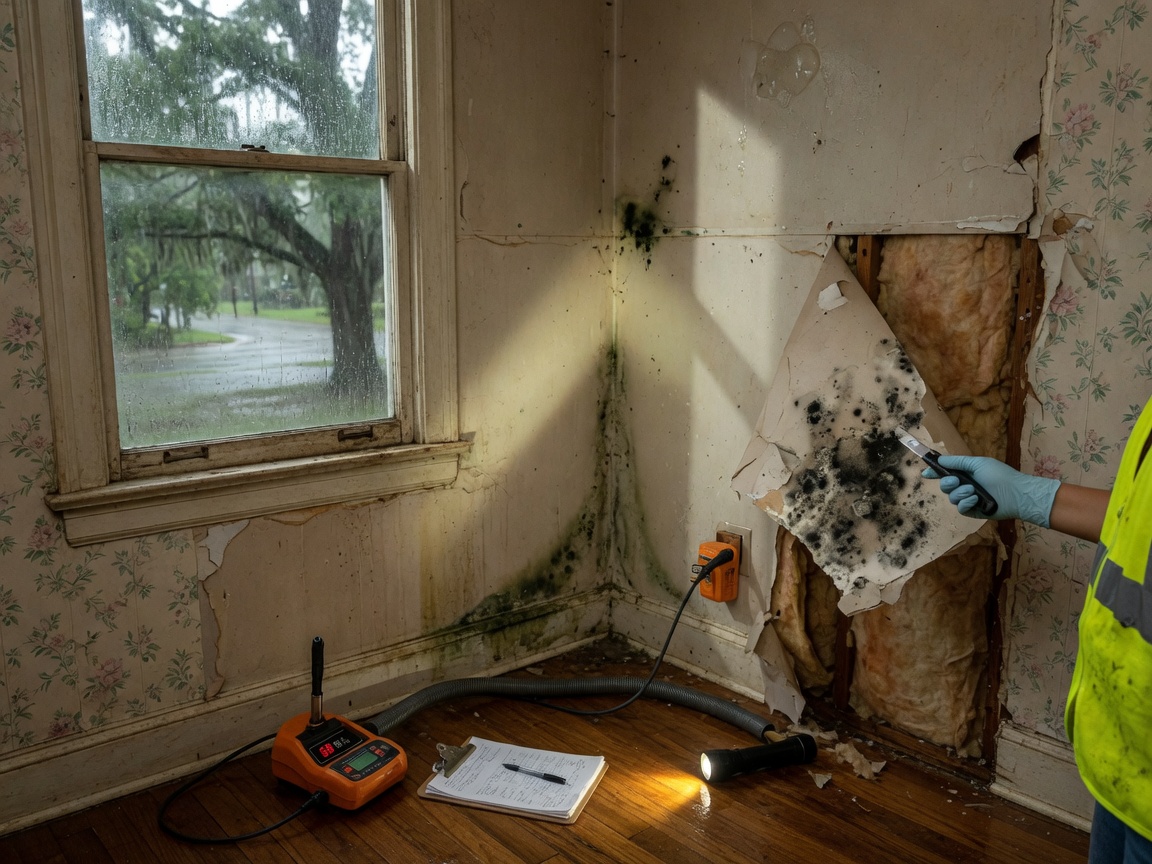
After Macon summer storms, hidden mold often appears first as a persistent musty smell in basements or attics within 48-72 hours, especially in homes built before 1970 across Bibb County. The region's hot, humid climate keeps indoor moisture levels elevated long after rainfall stops, allowing spores to colonize behind walls or under floors in 3-7 days. Older housing stock in areas like the College Street Historic District features plaster walls and crawl spaces that trap water from roof leaks or poor drainage during heavy downpours. Checking these spots promptly helps limit spread before it affects living areas.
Examining Attics After Heavy Rainfall
Macon summers bring frequent thunderstorms that drive water under shingles on older roofs common in Vineville and Ingleside. Walk through the attic with a flashlight to look for dark streaks on rafters or insulation that feels damp to the touch 24-48 hours post-storm. In Bibb County homes, poor ventilation combined with 80%+ humidity allows condensation to form on metal ducts, creating hidden growth sites. Pay attention to areas near chimneys or skylights where flashing may have failed during wind-driven rain. Document any discoloration on wood sheathing, as these spots often connect to larger colonies behind drywall in second-floor ceilings. Regular post-storm checks in these spaces catch problems before they reach living areas in nearby Warner Robins or Perry homes with similar construction.
Checking Crawl Spaces and Basements in Historic Districts
Crawl spaces under homes in the College Street Historic District and Beall's Hill frequently retain moisture after summer storms due to Bibb County's clay-heavy soil that drains slowly. Shine a light along joists for fuzzy white or black patches and test wooden beams for softness with a screwdriver. Standing water from overflowing gutters or foundation cracks often pools near the Ocmulgee River floodplain edges, feeding mold on insulation and subfloors. In mild winters that follow, temperatures rarely drop low enough to halt growth, so these hidden areas stay active year-round. Homeowners in Shirley Hills report similar issues where mature trees drop debris that clogs French drains, extending drying times by several days. Addressing these conditions requires targeted drying rather than surface cleaning alone.
Tracking Moisture in Walls and Flooring
Summer storms in Macon push humidity into wall cavities through small gaps around windows in Downtown Macon properties. Use a moisture meter on baseboards and check for buckling hardwood floors in Vineville homes where original pine boards absorb water from below. Musty odors near HVAC returns often signal growth on coils or in ductwork after condensate lines back up during heavy rain. In the Tubman Museum area and around Mercer University, many structures from the early 1900s have brick foundations that wick moisture upward, creating hidden colonies in first-floor closets. Compare readings taken before and after storms to identify new problem zones quickly.
Knowing When Professional Assessment Helps
When musty smells persist beyond one week or visible water stains appear on ceilings in Ingleside homes, a structured Mold Inspection and Testing process reveals the full extent. For growth behind walls in older Bibb County neighborhoods, Black Mold Removal techniques address hidden colonies without spreading spores. Readers dealing with repeated issues after storms may also find value in Mold Remediation Steps for Older Macon Neighborhoods that covers similar housing stock. These steps keep problems contained before they affect nearby Milledgeville properties with comparable terrain and weather patterns.