
2026-09-18 · Marcus Hale
Mold Remediation Steps for Older Macon Neighborhoods
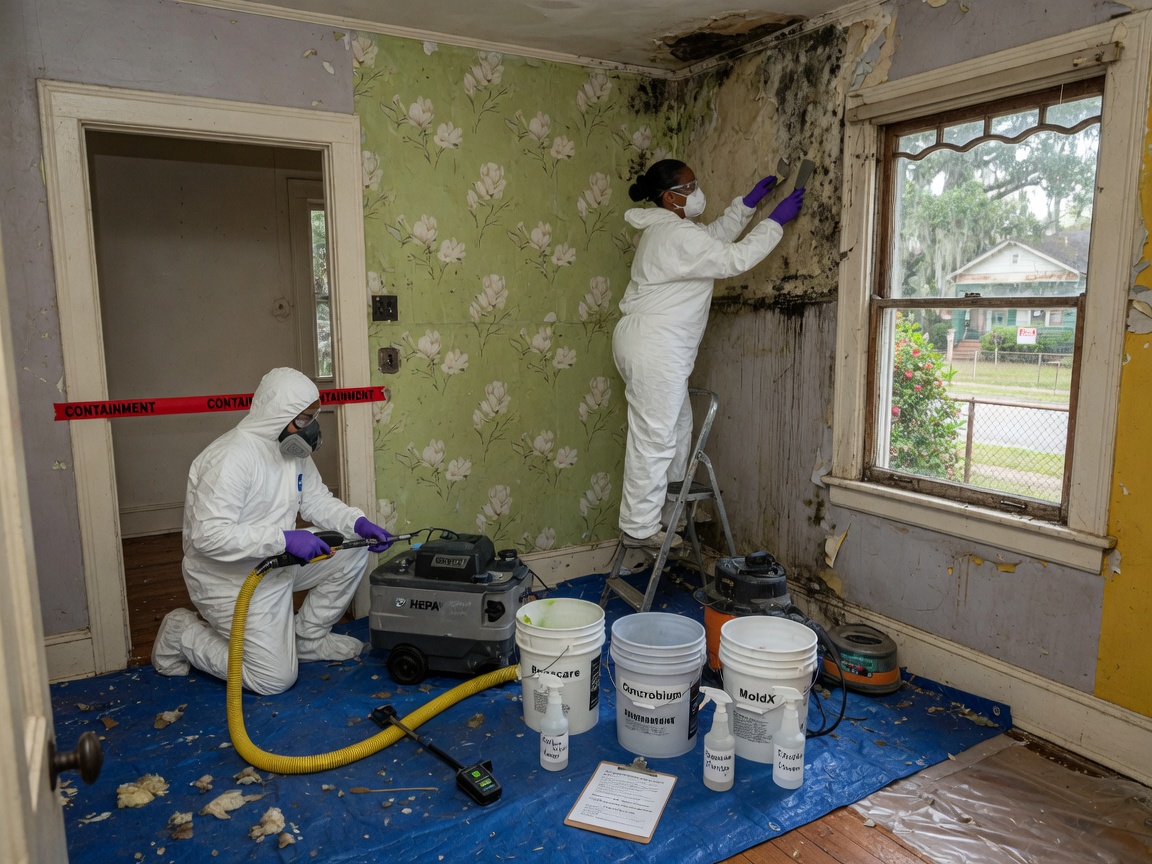
Mold remediation in older Macon neighborhoods typically follows a six-step sequence that begins with professional inspection and ends with moisture prevention, taking 3–10 days depending on the extent of growth and home size. Homes built before 1960 in areas like Downtown Macon and Beall's Hill often feature plaster walls, uninsulated crawl spaces, and galvanized pipes that leak slowly and stay hidden until humidity spikes.
Initial Assessment and Testing
Start every project with a full inspection that maps moisture sources and identifies mold types before any disturbance. In Bibb County homes near the Ocmulgee Mounds National Historical Park or Tubman Museum, inspectors check attics, knee walls, and under pier-and-beam foundations where summer humidity routinely pushes indoor levels above 60 percent. Mold Inspection and Testing uses moisture meters, thermal imaging, and air sampling to locate hidden colonies without guessing. Older lath-and-plaster construction in the College Street Historic District traps spores behind walls, so visual checks alone miss 70 percent of growth. Document every finding with photos and readings so homeowners see exactly which materials must be removed.
Containment and Worker Safety
Set up negative-air containment before cutting into walls or floors to keep spores from spreading through the rest of the house. In Vineville and Shirley Hills properties with open floor plans, plastic sheeting and HEPA air scrubbers create isolated zones that protect living areas during removal. Workers wear full PPE because older Macon homes often contain lead paint and asbestos alongside mold. Mild winters keep humidity high enough that dormant spores reactivate quickly once disturbed, so containment stays in place until clearance testing confirms zero airborne particles.
Removal From Historic Materials
Remove and dispose of porous materials such as drywall, insulation, and carpet that cannot be cleaned, while HEPA-vacuuming and wire-brushing non-porous surfaces like brick and hardwood. Crawl spaces under Ingleside homes frequently require full liner replacement after water intrusion from Bibb County clay soils that hold moisture for weeks. Basement and Crawl Space Mold Remediation addresses these tight spaces with antimicrobial rinses and new vapor barriers. After summer storms, hidden growth behind wainscoting in College Street Historic District homes often demands the same careful demolition used on storm-damaged properties. How to Spot Hidden Mold After Macon Summer Storms details the warning signs that appear weeks later in these older structures.
Drying, Verification, and Prevention
Run commercial dehumidifiers and air movers until wood moisture content drops below 12 percent, then perform post-remediation testing to verify success. In Macon's humid subtropical climate, install dehumidifiers set to 50 percent in basements and crawl spaces of homes near Central City Park to stop regrowth. Seal foundation cracks and improve grading around Shirley Hills properties so rainwater flows away from piers instead of pooling. Homeowners in nearby Warner Robins and Perry follow the same protocol because the same weather patterns affect the entire region. Final clearance includes a written report that lists every step completed and the equipment left in place for ongoing control.